
Concrete Floor Installation in Hacienda Heights CA - a floor ready for what goes on top
Old floor cracked, sinking or uneven? We pour a new slab on a packed base, with cracks kept tight and moisture handled for your flooring.
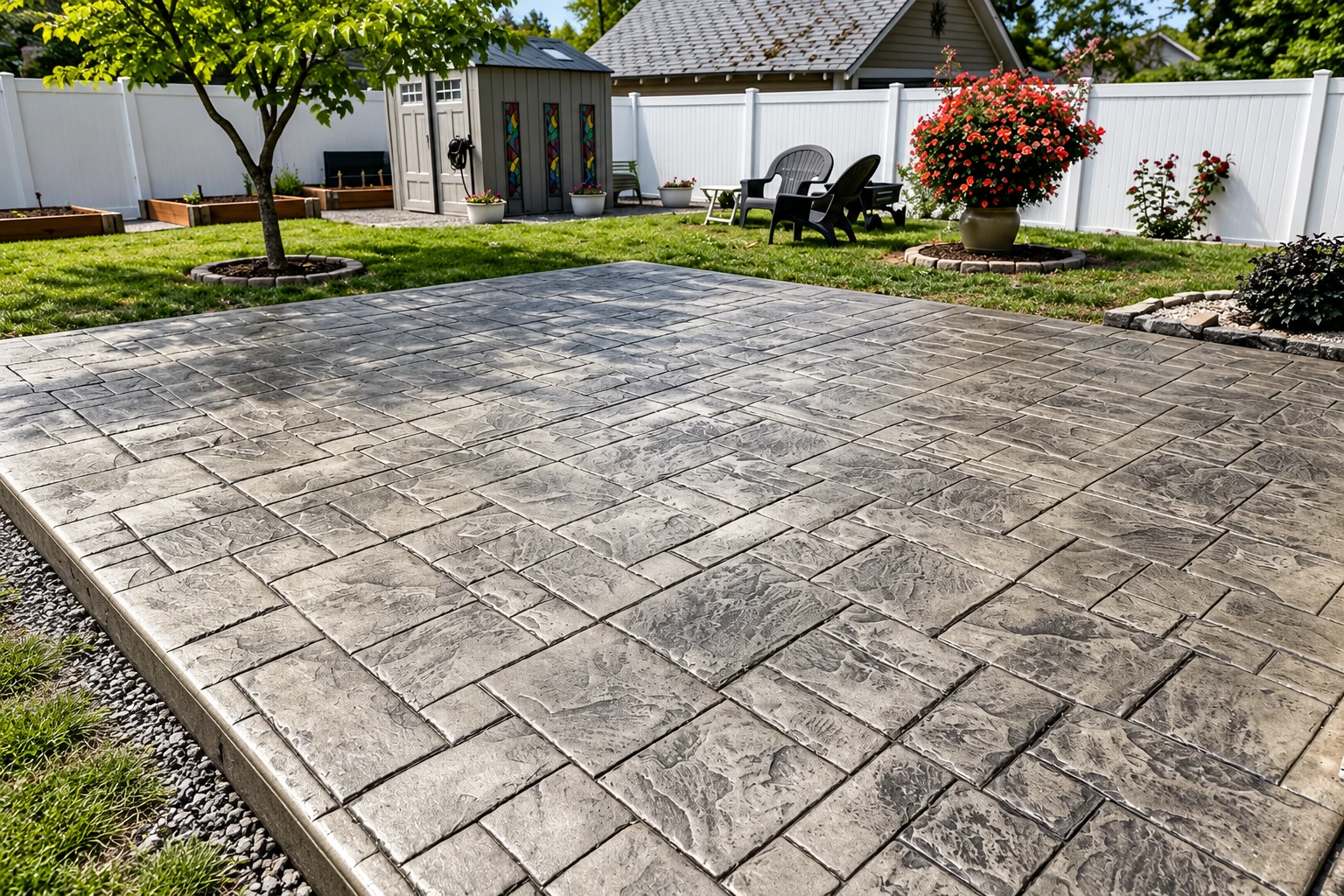
- Licensed and fully insured.
- Free estimates at your property.
- We respond within 1 business day.
What goes into a new concrete floor, from the base up to the cure?
Concrete floor installation in Hacienda Heights is the work of forming, pouring and finishing a new slab for your floor, whether it stays bare or goes under tile, wood or carpet. It usually comes with digging out and packing the base, setting reinforcement, cutting joints and laying a moisture barrier, and we do it both for new spaces and for replacing old, worn-out floors.
Most floor calls we get are either a space with no slab yet, like a new room or an enclosed patio, or an old floor that's cracked, sinking or uneven and has to come out. What moves the price is the size, whether there's old concrete to break out and haul off, how much digging and packing the base needs, and how much steel goes in. The schedule turns on the permit question for your address and on the cure, since your flooring can't go down until the slab is ready for it. If it's the garage, our garage floor concrete page covers that job, and either way the estimate gives you your own number.
How do you know your concrete floor needs replacing?
Cracks that keep opening
Hairline cracks are normal in any slab, but a crack that keeps widening or has one side higher than the other usually means the base under it moved. Waiting lets water and dirt work into it, and the tile or flooring on top breaks right along the same line.
A low spot or slope
A floor that dips in one corner or slopes where it should be flat usually sat on a base that was raked level instead of dug out and packed, so it settled with the dirt. It won't come back up on its own, and cabinets, doors and furniture start sitting crooked.
Flooring lifting or smelling damp
Loose tile, cupped wood or a musty smell from the carpet often points to moisture coming up through a slab with nothing under it to stop it. Replacing the flooring alone usually just ruins the next set.
Work that often goes with a floor
Concrete pool decks
When the room you're redoing opens to the backyard, a pool deck finished to drain away from the house carries the work outside without puddles at the door.
Concrete steps construction
A new floor often sits higher or lower than the old one, so the steps at the door may need rebuilding to keep each rise even and safe.
How we pour a concrete floor
A slab will crack some no matter who pours it, so we plan the joints and reinforcement to keep those cracks tight and where they belong. We dig out and pack the subgrade, the ground the slab sits on, because a base that's only raked level settles and takes your floor with it. Then we lay the moisture barrier, set the rebar, the steel inside that holds cracks closed, and form the edges. We pour early in the day instead of in the midday heat so the top doesn't come out weak and dusty, and we cut control joints, planned lines that give the slab a place to crack, before it picks its own spots. After that it cures, which is the wait while the concrete gains strength. So what's going on top, tile, wood, carpet or bare concrete? Tell me, because that changes how we handle moisture under the slab. If the budget gets tight, I'd rather you spend it on the base than a fancier finish, because you can redo a surface later but you can't fix a bad base without tearing the floor out.
A floor job often runs into the work around it. If the room opens onto the yard, we can pour concrete pool decks while we're set up, and if the new floor changes the height at a doorway, our concrete steps construction keeps every rise matched.
A new slab where there's none
This suits a new room, an enclosed patio or a space that's been dirt or gravel, because we're building from the base up and can set it right from day one. It's usually the simpler job, since there's nothing to break out first.
Tearing out and replacing a floor
This suits a slab that's cracked wide, sunk or pulled away from the walls, where patching would only hide the problem. We break it out, haul it off and fix whatever let the old base move before we pour the new one.
Get a free estimate for your new concrete floor
Send the form and we'll get back to you within one business day to set a time for me to come out, with no obligation. Rather talk? Call (626) 413-5388.
Call (626) 413-5388Why Hacienda Heights homeowners call Elite Hacienda Heights Concrete for floors
I write every estimate myself
I look at every job in person and write the estimate, then I'm on site checking while our own crew forms, pours and finishes. The person who priced your floor is the one who answers for it.
Running our own business since 2013
I started as a helper on a small crew, mixing and hauling long before anyone let me finish, and opened this business in Hacienda Heights in 2013. Learning it from the bottom up means I know which steps get skipped when nobody's watching.
Licensed and fully insured
We're licensed and fully insured. Contractors who repair, remodel or add to homes in California are licensed by the Contractors State License Board, so ask anyone you're comparing about theirs.
Based here, working all around
We're based in Hacienda Heights and pour floors in many of the cities around it, including Whittier, La Puente and West Covina. Those are just some of the places we go, so ask even if your city isn't listed.
If you've got a floor in mind, send us a note on our contact page and I'll come out and measure it.
What happens after you call about a concrete floor in Hacienda Heights?
Call or send a message
Call (626) 413-5388 or use the form and tell us a little about the floor. We'll set up a time for me to come out.
I measure and price it
I measure, ask how the space will get used and look at what's in the way, like an old slab, doorways or pipes. Then I write up the estimate so you have your price in writing before you decide anything.
Sort the permit, then pour
Before anything gets poured, we sort out the permit question with the right office for your address. Then our crew forms, pours and finishes the floor, and I check the work before we call it done.
Common questions
Will my new concrete floor crack?
Yes, some, and anyone who tells you otherwise isn't being straight with you. The concrete industry's national guide to floors and slabs, last updated in 2015, says some cracking and curling, where the edges at a joint lift a little, is normal on every job even with the best design and proper work. That's why we plan the joints and steel up front, so the cracks you do get stay tight and land where we chose.
Is rebar worth it in a concrete floor?
Usually yes, as long as you know what it does. Reinforcement won't stop a slab from cracking, but the same guide says steel that's sized and placed right keeps cracks tightly closed. Around Los Angeles it costs more per square foot than a slab without it, so you're trading a higher price for tighter cracks, and on a floor going under tile I'd put it in.
How much does a concrete floor cost around Los Angeles?
A concrete slab in the Los Angeles area usually costs about $7 to $15 per square foot, before any staining or stamping. Where yours lands depends on the size, whether an old floor has to come out, how much base work it needs and whether it's reinforced. Your estimate gives you the number for your floor.
How long does a new concrete floor take to cure before I can walk on it?
A slab should be walkable within about 48 hours, though concrete takes a month to fully cure. To be safe, plan on waiting about a week before heavy loads like furniture, appliances or other trades' equipment go on it, and set your move-in or flooring work around that week.
Who issues the permit for a concrete floor in Hacienda Heights?
It depends on where your property sits. LA County Public Works handles building and safety for unincorporated LA County and for cities that contract with it, and its permit list names new building, additions, repairs and grading rather than concrete floors, so it's the office to ask about your job. A property outside the county's area may go through another office, and when you apply for a county permit, the office tells you whether a plan check, a review of your plans, is needed and how to get it approved.
What is the best way to keep moisture from ruining flooring over a concrete slab?
Put a vapor retarder, a plastic moisture barrier, right against the bottom of the slab. The national guide says experience shows a barrier in direct contact with the slab gives the flooring, coatings and the house the most protection. Slabs also curl a little at the joints as they dry unevenly, which can cause trouble for some coverings put down in the months after the pour, so the kind of flooring matters when you plan when it goes down.
Tell us about the floor you need
Call (626) 413-5388 or use the form with the floor size, whether it's new or replacing an old slab, and the flooring you plan to put down, so I show up knowing what to look at.