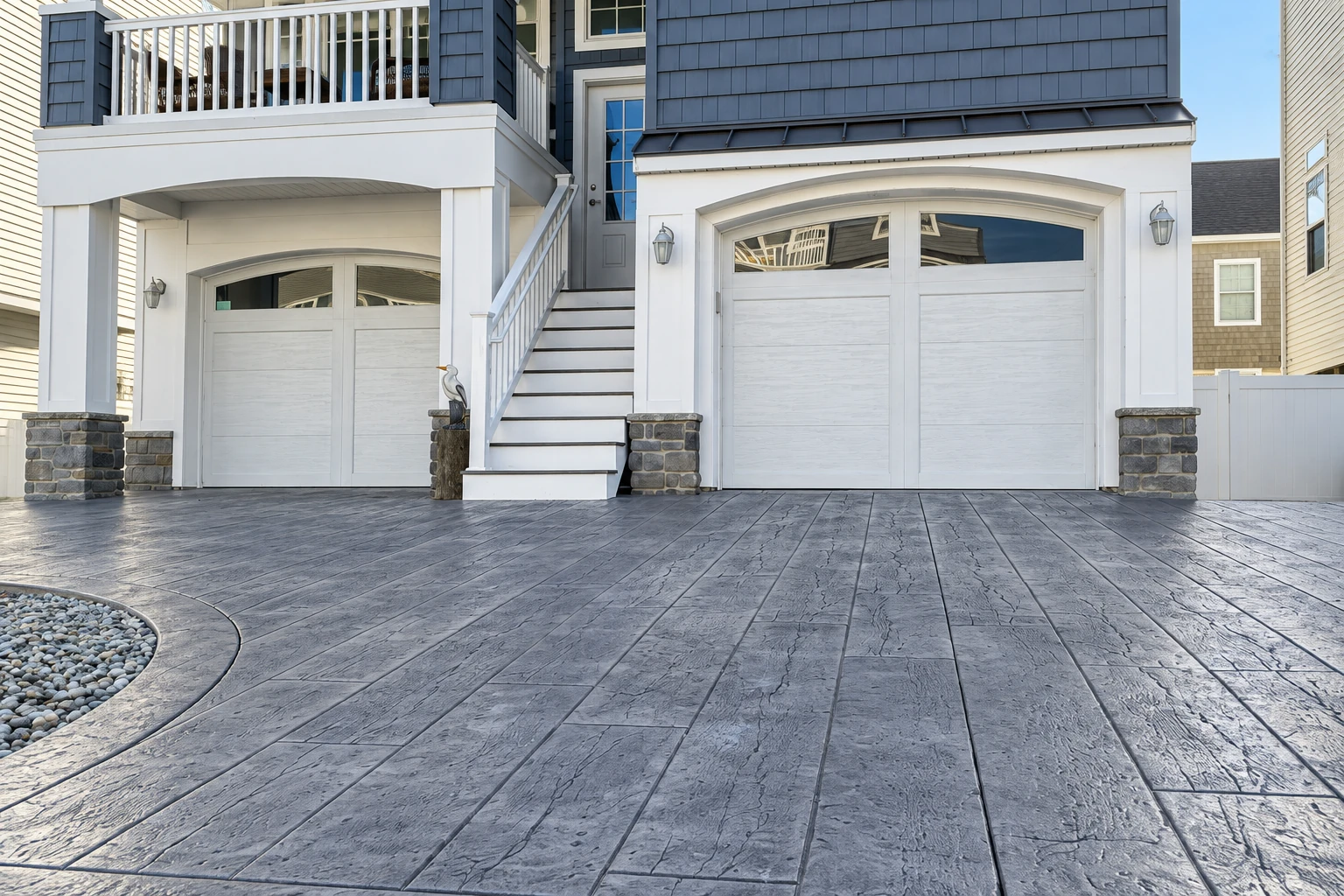
Stamped concrete services in Hacienda Heights CA - a design that fits your budget
Plain gray slab looking tired? We'll pour a stamped patio or driveway in a pattern and color you can afford to keep up.
- Licensed and fully insured.
- Free estimates at your property.
- We respond within 1 business day.
What goes into stamped concrete for a patio or driveway in Hacienda Heights?
Stamped concrete in Hacienda Heights is a new patio, driveway or walk that we form, pour and finish, then press with a pattern and color while it's still soft. It looks like stone, brick or tile but goes down as one slab. It usually comes with tearing out the old concrete and preparing the ground, and a sealer goes on once the slab has cured.
Most people who call us have a plain slab that's cracked, stained or just worn out, and they want something that looks like stone without paying for stone. The price moves with how big the area is, how detailed a pattern you pick and whether it's a patio or a driveway that has to carry cars. The schedule mostly depends on how easy the spot is to reach and how long the slab cures before we seal it. A hillside lot or a narrow side yard can take longer, because material sometimes has to go in by hand. You'll get your own number from the estimate, once I've measured and seen the space.
How do you know your slab is ready for stamped concrete or a reseal?
Color looks washed out
If the pattern's still there but the color has gone flat and chalky, the sealer on top has usually worn thin. The longer you wait, the more sun and dirt work into the concrete itself, and that's harder to bring back than a reseal.
Water soaks in dark
After rain or watering, you see dark spots where the water used to bead up. That means the sealer isn't keeping water out anymore, so oil and spills can soak in and leave stains that won't wash off.
Old slab cracked and uneven
If your plain patio or driveway has cracks with one side higher than the other, the ground under it has usually settled, and patching won't hold for long. Waiting means more trip edges and more water pooling, and a new stamped pour is often the better place to put that money.
Often poured alongside stamped concrete
Concrete sidewalk building
If your new stamped patio needs a walk from the driveway or side gate, pouring both together lets the path match or frame the pattern.
Garage floor concrete
A stamped driveway runs right up to the garage, so a cracked or sinking garage floor is often worth redoing while our crew is already set up.
How we build stamped concrete, from the base up
Before you fall for the fanciest pattern, I'll show you the trade. A simpler one costs less and is easier to keep up. If the budget's tight, I'd rather you take a plainer pattern than skimp on the base, because nobody sees the base on day one but it decides whether your pattern stays flat. So our crew digs out and packs the subgrade, the dirt and base the slab sits on, instead of raking it level and letting it settle later. We check where the water will run so the slab falls away from the house, and we pour early in the day so the afternoon heat doesn't leave a weak, dusty top. While it's still workable, we color and stamp it. Then we cut control joints, shallow grooves that give the slab a planned place to crack, and let it cure before it's sealed. Concrete cracks some, stamped or not, and the base and the joints are how we keep those cracks where we chose.
Stamped jobs often grow once the plan is down on paper. A new patio needs a way to get to it, so we often handle concrete sidewalk building on the same job. A stamped driveway ends at the garage door, and if that slab is tired too, garage floor concrete keeps the old floor from sitting next to the new pour.
One pattern, one color
This is the basic design, and it costs less and is easier to maintain than anything fancier. It suits most patios and anyone who'd rather enjoy the space than fuss over it.
More color or texture
Mid-range styles add more color or texture than a basic design without going all the way to borders and inlays. It's a good fit if you want more depth and can live with a bit more upkeep.
Borders and custom inlays
Intricate patterns, borders and inlays can add curb appeal and resale value, but they cost the most up front and take the most care after. I'd point this at a front entry or a yard you really show off.
Stamped driveway
A driveway usually needs a thicker slab and stronger rebar, the steel that holds the concrete together, than a patio with the same pattern, because a car loads it very differently than patio chairs do. So tell me whether cars will park on it or it's just for a grill and a table.
Get a free stamped concrete estimate at your property
Send the form and we'll reply within one business day to set a time for me to come out and write a free estimate, with no obligation. Calling (626) 413-5388 works too.
Call (626) 413-5388Why Hacienda Heights homeowners call Elite Hacienda Heights Concrete for stamped work
I walk every job myself
I come out to look at your space and write the estimate, and our own crew does the forming, pouring and finishing while I'm on site checking it. The person who priced your pattern is the one making sure it went down right.
In business since 2013
I started as a helper on a small crew, mixing and hauling long before anyone let me finish a slab, and I've run this business for 13 years. That's long enough to see which patterns people are glad they picked and which ones they're stuck sealing.
Licensed and fully insured
We're licensed and fully insured, so you aren't carrying the risk of the work done on your property. In California, the Contractors State License Board licenses the contractors who build or improve driveways and patios at a home.
County or city, checked first
Around Hacienda Heights, who issues a permit depends on whether your property sits in county territory or inside a city. We check with the right office for your address before we start, and when a job needs a permit, we handle it as part of the work.
Pick the pattern you'll be glad to keep up, not just the one that looks best on a sample. Tell us about your space and I'll come take a look.
What happens after you call about stamped concrete?
Call or send us a message
Call (626) 413-5388 or use the form, and we'll set a time for me to come out. It helps to know the rough size, whether it's a patio or a driveway, and any pattern you've seen and liked.
I measure and write it up
I measure, ask how the space gets used and look at what's in the way, like old concrete, trees or a tight gate. Your estimate covers your slab, pattern and sealer, so you can see what a simpler design would save before you decide.
Permit settled, then we pour
Before anything gets poured, we sort out the permit question with the right office for your address. Then our crew preps the base, pours, colors, stamps and cuts the joints.
I check it before we're done
I look the work over before we call it finished. Then we show you what worn sealer looks like, so you'll know when it's time to reseal.
Common questions
How much does stamped concrete cost in the Los Angeles area?
Stamped concrete in the Los Angeles area usually costs about $15 to $30 per square foot. Where your job lands depends on the size of the area, how detailed the design is and local contractor rates. A single pattern in one color sits toward the lower end, while borders and inlays push it up.
How do I choose a sealer for a stamped patio or driveway?
Pick based on whether you want richer color or plain protection. Film-forming sealers coat the top and are the most common because they deepen the color. Most penetrating sealers soak in and guard against water and stains without changing the look. We'll talk through which one suits how you use the space.
How often does stamped concrete need to be resealed?
Reseal when the surface tells you to, not on a set schedule. Once water stops beading, stains start soaking in or the color goes flat, it's time. Resealing before then just builds up layers that take time and money to strip off.
Who issues permits for concrete work in unincorporated LA County?
LA County Public Works issues permits in unincorporated LA County, including grading permits for projects that change the land, like moving soil or creating slopes. Work in the public right-of-way, the strip along the street that the public owns, goes through the county's Public Infrastructure team for encroachment and excavation permits. Not every address around here is unincorporated, so look yours up first with the county's Service Locator, which shows which office gives permits for your street address.
How long does stamped concrete need to cure before it's sealed?
Stamped concrete has to be fully cured, or cured to a certain point, before it's sealed, and the usual standard for full cure is 28 days. Curing is the slow hardening that gives the slab its strength. Your location, the time of year and the sealer you pick can shorten or stretch that wait, so sealing usually comes a while after the pour.
What is the best way to keep a high-gloss finish on stamped concrete?
Choose the gloss when you pick the finish, not later, because resealing every year just to hold a high shine can cause problems. If a wet, shiny look matters to you, tell me early so we can weigh it against the upkeep.
Get your stamped concrete pattern priced out
Have the rough size, whether it's a patio or driveway, a pattern you like and your address ready, then call (626) 413-5388, send the form or email office@concretehaciendaheights.com.